9 October 2026
Raw Mathematics
“To fear the error and to fear the truth are one and the same. One who fears to be wrong is powerless to discover. It is when we are afraid of making mistakes that the mistake inside us becomes immovable like a rock. Because in our fear, we cling to what we have decreed to be “true”, or what has always been presented to us as “true”. If we are moved, not by the fear of seeing an illusory security vanish, but by a thirst for knowing, then error, like suffering or sorrow, will cross us without ever becoming frozen, and the trace of its passage will be a renewed understanding.”
One of the most memorable museums I have ever visited is the Collection de l'Art Brut in Lausanne, Switzerland.
Art Brut, often translated as “raw art” or “outsider art”, refers to art created outside the traditional art world freed from aesthetic and cultural norms, conventions, and institutions. The term was coined by the French artist Jean Dubuffet, who in the 1940’s began collecting works made by psychiatric patients and the mentally ill, individuals with autistic traits, savants, mystics, prisoners, and other artists situated outside the established cultural and artistic mainstream. Dubuffet was drawn to these forms of expression precisely because they emerged independently of conventional artistic education, institutions, and expectations 11Collection de l'Art Brut, Lausanne. Introduction to the concept of Art Brut (museum website). https://artbrut.ch/en/what-is-raw-art.
Obsession, repetition, transcendence, emphasis on textures, geometric patterns, symmetry and structure, classification, and meticulous attention to detail, are often recurrent themes.
Although these artists are often marginalized and may have not gone through the canonical training, their work is by no means devoid of artistic rigor or depth. On the contrary, their aesthetic sensibilities can prove remarkably sophisticated, even when evaluated through the artistic frameworks from which they have been excluded.
Here are works of Art Brut by five of its artists:
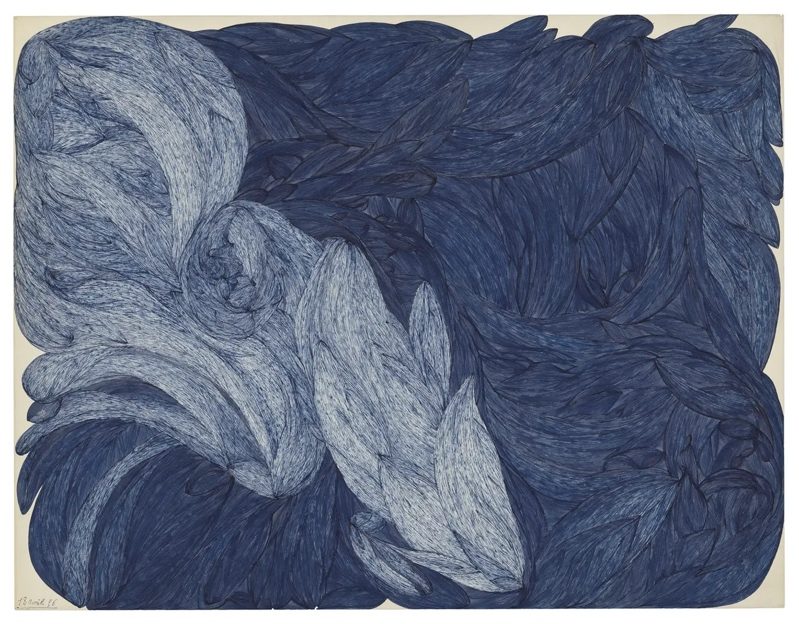
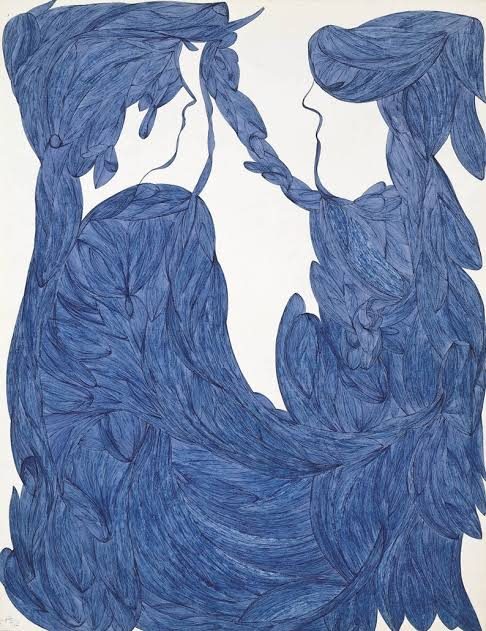
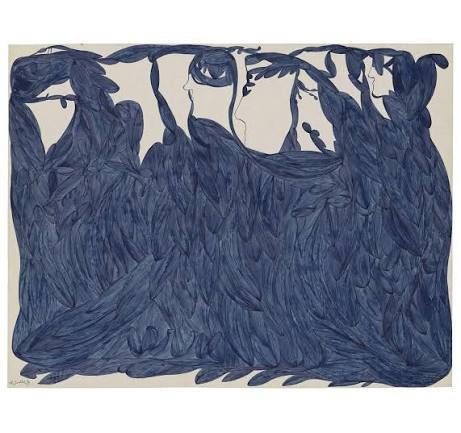
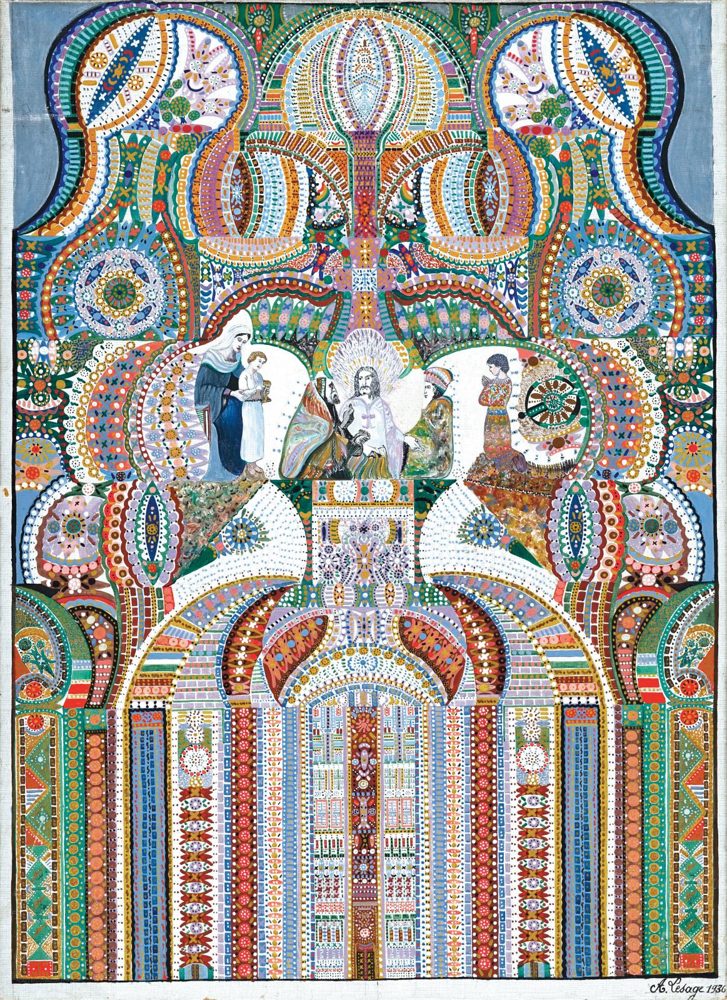
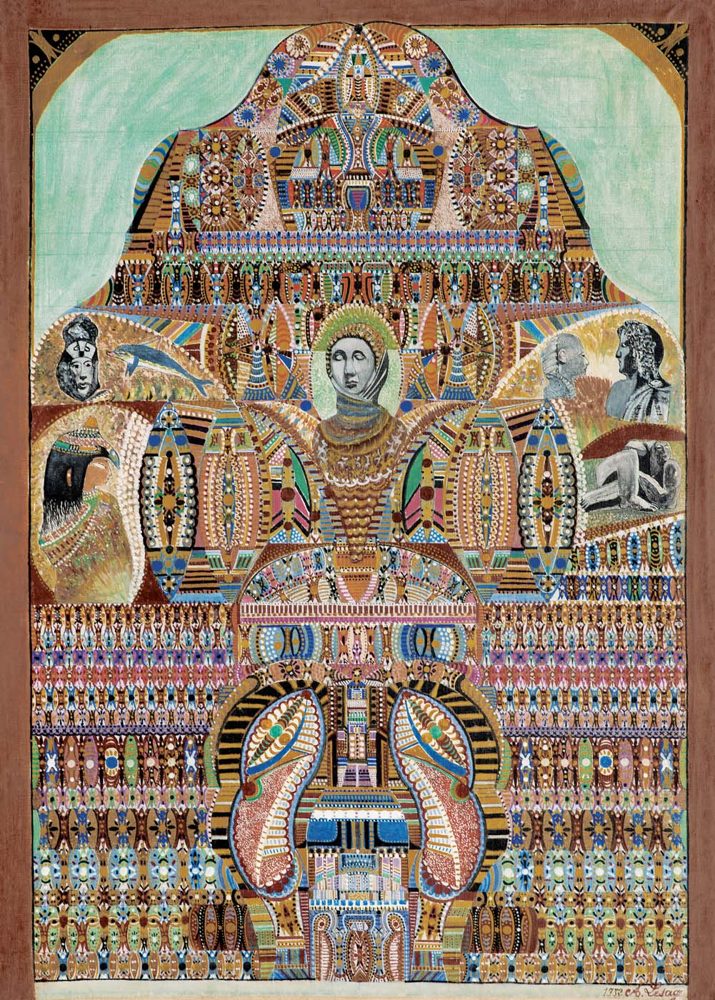
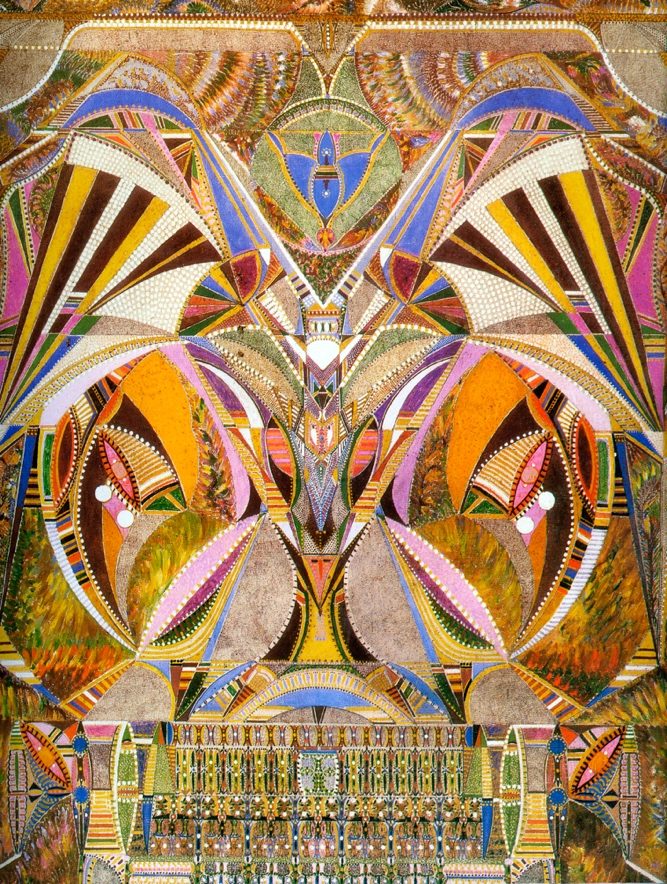
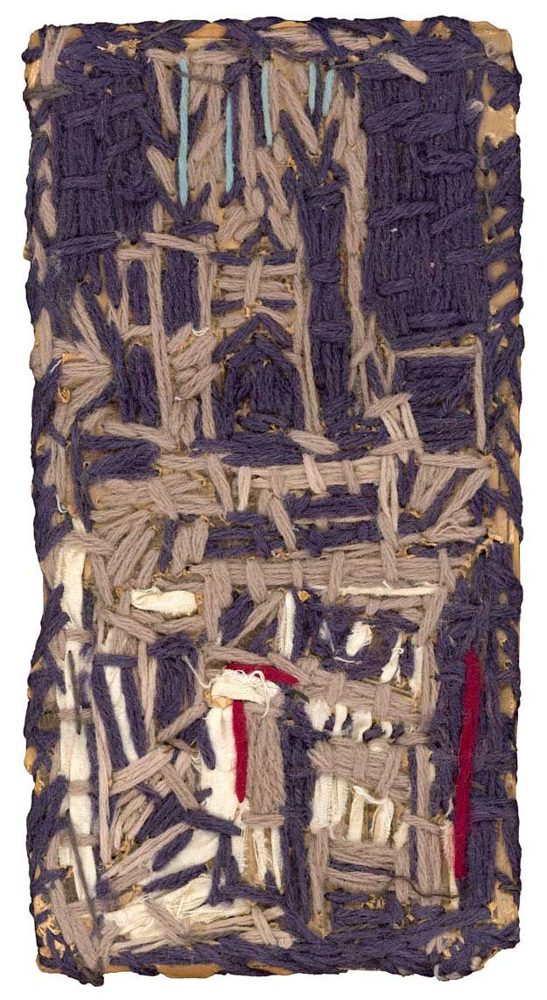
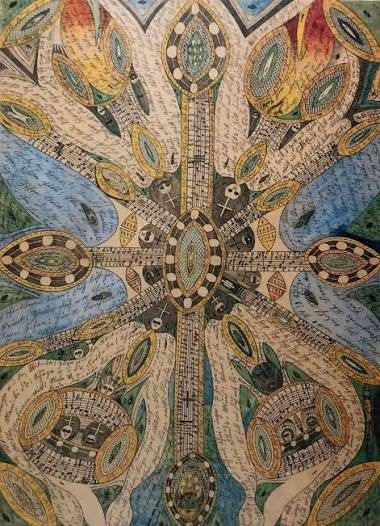
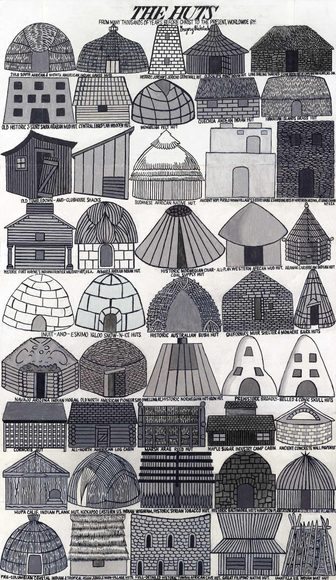
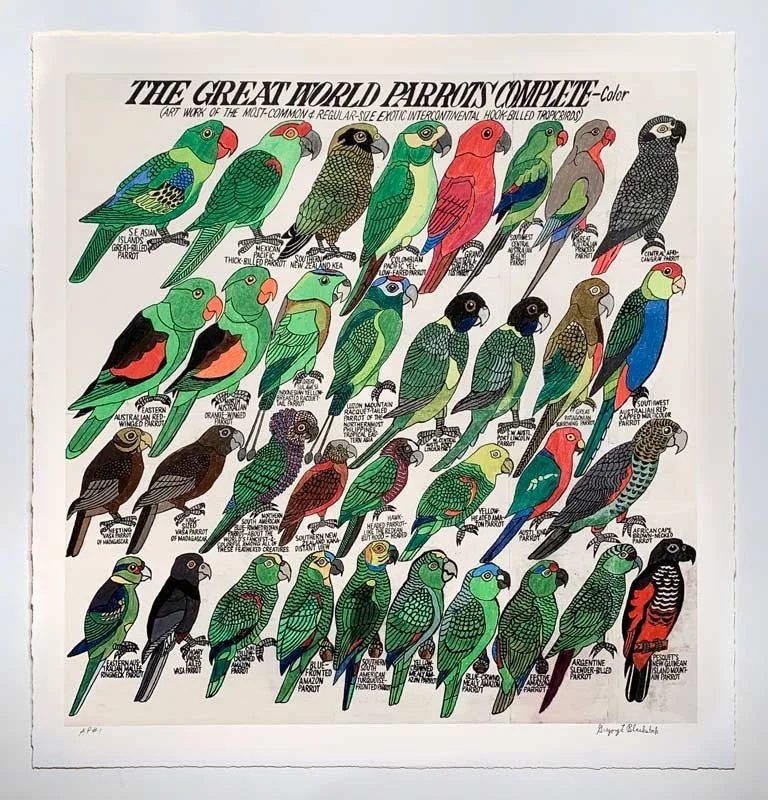
The Collection of Art Brut in Lausanne further describes the concept as follows:
“Works of Art Brut are created by self-taught artists, carved out in a rebellious mindset or impermeable to collective norms and values, who create without concerning themselves with public criticism or the gaze of others. Without a need for recognition or approval, these individuals forge a universe for their own use. Their works, produced with generally unique means and materials, are free from influences derived from artistic tradition and employ distinctive modes of figuration.” 11Collection de l'Art Brut, Lausanne. Introduction to the concept of Art Brut (museum website). https://artbrut.ch/en/what-is-raw-art
Jean Dubuffet offered the following definition:
« We understand this [Art Brut] as works executed by people who are free from artistic culture, where mimetic influence – contrary to what occurs with intellectuals – has little or no role, so that their authors derive everything (subjects, choice of materials employed, means of transposition, rhythms, forms of writing, etc.) from their own foundation and not from clichés of classical art or fashionable art. We witness a purely pure, raw artistic operation reinvented in its entirety by its author through all its phases, based solely on his own impulses. This art manifests only the function of invention, and not the persistent roles of the chameleon and the monkey that are constant in cultural art.» 22Jean Dubuffet. Art Brut Preferred over Cultural Arts (L'Art Brut préféré aux arts culturels). Paris: Galerie René Drouin, 1949.
The French word brut means “raw, unprocessed, crude.” Its etymology can be traced back to the Latin brutus, meaning “heavy, dull, stupid, insensible, or unreasonable,” which is also the source of the Spanish and Italian bruto, meaning without refinement or “unintelligent”, and the English brute, used to describe a kind of physical strength or power without thought, reason, or gentleness. Interestingly, the French adjective brut and Spanish bruto also has a meaning in economics and finance, where it corresponds to the English word “gross”, that is, an amount before any withholding, deduction, or other reduction is applied.
Art Brut unfolds independently of the authority of official institutions, artistic gatekeepers, the demands of the market, or the capabilities of technological advances. These systems become irrelevant in the creative process of these artists, who follow their raw internal impulses without any concerns for satisfying academic expectations or preconceived notions of productivity, public approval, fame, exhibition, and selling their art. There is an admirable sense of freedom, transparency, intensity, and, ultimately, humanity in the way these individuals practice their vocation.
What might a collection of mathématiques brutes, or “raw mathematics,” look like? What, for that matter, might constitute “raw understanding”?
There are profound differences between the ways mathematics and most of the plastic arts are practiced. So, being a good topologist, I will inevitably stretch the analogy… hopefully without breaking its global structure.
To begin with, mathematics lies somewhere at the intersection of art and science, in the interplay between creation and discovery. It is an exact science, aimed at understanding structure, guided, in part, by aesthetics and creativity. The coexistence of these two dimensions is often misunderstood: the pursuit of an exact science does not preclude artistic freedom. Many writers and poets, particularly those who have had contact with mathematicians, have long understood constraint itself as a form of liberation, e.g., Oulipo 33“Oulipo: Freeing Literature by Tightening Its Rules.” The Guardian, 12 July 2013. https://www.theguardian.com/books/booksblog/2013/jul/12/oulipo-freeing-literature-tightening-rules, Pedro Poitevin 44Pedro Poitevin. Personal website. https://pedropoitevin.com/.
There is another important difference. Although mathematical work can certainly be produced in isolation and with minimal formal training—as in the familiar romantic figure of the mathematical genius à la Ramanujan—modern mathematics is, for the most part, a collective endeavor deeply rooted in tradition. Most contemporary subfields develop incrementally, through collaborations that build upon layers of previous work, while mathematical traditions pass knowledge, techniques, and ways of thinking from one generation to the next. In making this analogy, therefore, I am less interested in the sometimes untrained nature of Art Brut artists than in their creative processes and in the relationship they develop with their work. The collaborative and deeply tradition-dependent nature of mathematics suggests that any notion of “rawness” must itself have a collective dimension.
The analogy that I will establish has further limits: Art Brut artists were often excluded or confined by institutions, while the practice I will be describing involves largely insiders who can choose to step back. Furthermore, the label Art Brut has itself been criticized for exoticizing its artists. What I borrow from Dubuffet is the spirit of independence, not any romance of marginality.
To describe what raw mathematics might look like, I will begin by asking what, in the present context, processed mathematics might be.
Two forces seem to be “processing” the mathematical practice today: the academic establishment and, more recently, the AI industry. Both forces use arbitrary notions of productivity and efficiency to justify their processing. The processed product is often an impoverished form of the practice, one in which human understanding is diminished or, in some cases, nearly absent. This is the price withheld or deducted from the gross product—from the produit brut. These forces also act as sources of what Dubuffet calls “mimetic influence”: the pressures through which a community reproduces its own conventions and hierarchies.
Consider, first, how the processing operates within academia. We have all seen (or perhaps been) the early-career mathematician that ends up falling to the pressures of academia and rushes through a project using results from the literature without fully understanding them, failing to check details carefully, resorting to unnecessary formalism to create an impression of depth or sophistication, or not being fully honest about their understanding. These compromises are driven less by mathematical necessity than by the demands of the academic system: publish, secure a position, obtain tenure, and eventually earn promotion. The result can be mathematical work riddled with mistakes and imprecisions or, more insidiously, work produced with only a superficial understanding of the mathematics it contains.
The academic establishment inevitably acts as a gatekeeper. Through its control over publishing, hiring, and recognition, it establishes trends and assigns disproportionate value to certain fashionable subfields or styles (problem solving, for instance) sometimes in ways that reflect the interests of tightly knit circles seeking to preserve the prestige of their own communities. Mathematical taste and curiosity, which can be powerful creative forces, can thereby harden into conformity.
More recently, the tech industry has begun to permeate the mathematical practice by using AI agents to produce and publicize “solutions” to important open problems, often as demonstrations of the capabilities of their models. Here the processing is direct and extreme: the AI generated mathematics may be formally verified while remaining poorly digested, written, referenced, and paced. The function of human mathematicians then becomes unraveling such an output to make it understandable, becoming a kind of “Mechanical Turk” 55Silicon Reckoner (Substack newsletter by Michael Harris), post on mathematicians as “Mechanical Turks.” https://siliconreckoner.substack.com/p/now-all-mathematicians-can-be-mechanical, an exercise detached from the dynamic experiences that have historically guided and organized mathematical research and progress and much closer to the process of refereeing for mathematical journals, but without the component of entering the psychology of another human being. Rather than evolving into, or giving rise to, new mathematics, new ideas, or new areas of research outside the convex hull of the previous work, the product’s primary function becomes validating a piece of technology. The industry expects mathematicians will perform this validation process in exchange of support and infrastructure in a global political environment where there is less public funding for academic research. A great deal has already been written about this 6,76“100 Reactions to 100 Solutions.” Proofs and Prompts, 8 October 2026. https://proofsandprompts.com/2026/10/08/100-reactions-to-100-solutions/7Alexander Gamburd. “The Siren Call of Silicon Leviathan: Reflections on blowup and Aufklärungsdämmerung.” arXiv:2609.28591, 2026. https://arxiv.org/abs/2609.28591.
At the same time, a significant faction of the academic establishment has cozied up to the AI industry, promoting the dependence on LLMs for mathematical research and, more broadly attempting to redefine mathematical practice around tools that are presented as indispensable.
The alliances that some professional mathematicians are seeking with the AI industry do not always seem to be motivated by scientific curiosity, much less aesthetic considerations. They can instead appear driven by the need of particular circles to renew their relevance, power, gatekeeping status, and prestige in a changing technological landscape.
These forces have disrupted some of the utopian pockets that have long existed within the professional mathematical community. One response is to strengthen and expand the culture of raw, unprocessed mathematics.
One could try to adapt Dubuffet’s definition to our context as follows:
« We understand raw mathematics as mathematical work executed by people who are free from the pressures and pace imposed by the academic establishment and the AI industry, where mimetic influence has little or no role, so that their authors choose what to work on, digest, and experience following their own interests, rhythms, impulses, and methods while emphasizing creativity and transparent understanding above anything else.
We witness a purely pure, raw mathematical operation reinvented and discovered in its entirety by its authors through all its phases, based solely on their psychology and understanding. This work manifests the interplay between creation, discovery, and understanding, and not the persistent roles of the chameleon and the monkey that are constant throughout some pockets of the academic community»
Thus, raw mathematics is mathematics in which the experience of understanding, discovery, creation, curiosity, and aesthetic judgment is allowed to determine the rhythm, direction, and standards of the work, rather than those things being predetermined by external systems of validation and production.
Of course, there is plenty of space and freedom to use (or not use) any form of technology, including AI tools, in what I envision as raw mathematics. This practice is not in tension with technology, but with the industries, institutions, and markets that aim to redefine (passively and actively) the values of the mathematical practice by dictating what should be digested, what tools must be used, how it should be experienced, in order to be considered a productive member of the community and have access to infrastructure.
The dichotomy between raw and processed mathematics is related to, but different from, the distinction between slow and fast mathematics discussed by B. Antieau 88Benjamin Antieau. “Fast math/slow math.” 15 September 2026. https://antieau.github.io/2026/09/15/fast-math-slow-math.html. Like slow math, raw mathematics insists that pace and rhythm be set by understanding rather than by output; but where slow and fast math describe different modes of working within the community, the concept of raw mathematics takes into account the terms, values, incentives, and motivations that guide the creative process.
I envision a renewed culture and community built around raw mathematical practice taking inspiration from the forms of Art Brut as a response to the apparent smoothness, productivity, and efficiency promised by the structures that act as gatekeepers and processing factories. It could be developed within the infrastructure of academia, but it should not be bound by it; in such a community, the vocational dimension of mathematics would outweigh its professional dimension. Its members would be driven by scientific curiosity and aesthetic sensibility rather than by prestige, recognition, or competition. There would be a sense of authorship, so that we know who is thinking about what, but without competitive ownership of ideas.
Its main mode of exchange could be open, in-person seminars and discussions with no time limits, where speakers are free to think aloud and explain things fully, in the spirit of the Russian-style seminars that make it possible to get to the bottom of things. There would be no intimidation and no shame in asking basic questions, no need to impress anyone, no egos, and no fancy language or formalism used to hide a lack of understanding. Quality exposition and writing would be emphasized. The community would also protect quality time to think and digest mathematics individually, in solitude, without external pressures.
The shake-up the discipline is undergoing because of the disruption of the AI industry is also an opportunity to strip away the academic practices that stifle mathematical progress. At the same time, we should refuse to become an army of “Mechanical Turks” or letting the AI industry dictate how we operate. I believe a community organized around raw mathematics could reach a creative and scientific depth that we cannot yet foresee, and one far stronger than a research community primarily built around AI tools, steered by the AI industry, or around the elitism of academic gatekeepers. Public interest and support would then follow as a consequence.
At its heart, however, this would require recovering something more fundamental: a sense of openness to the unknown, a thirst of knowing (as in Grothendieck’s quote above), and a willingness to enter into mathematics without knowing in advance where it will lead.
In fact, recall the following description that A. Beilinson gives of the spirit of the Gelfand seminar (the prototype of the Russian-style seminar) 99Alexander Beilinson. “I.M. Gelfand and his seminar — a presence.” arXiv:1505.00710, 2015. https://arxiv.org/pdf/1505.00710:
“One difference between IM’s seminar and other great mathematical seminars was its openness: the talks were not aimed at explaining any distinctive subject, nor were they connected to IM’s current work, but rather these were stories that might contain a call from the future. This was in tune with the next feeling: We are used to seeing science’s accomplishments as being fundamental. Over time the magical picture switches, and we realize that, in fact, we know almost nothing about the world, and science merely attempts to hide the vast openness. But we are able to wonder and take in new things, and to feel gratitude, only due to the wind that blows through us.”
Raw mathematics emerges precisely from the tension between human limitation and the vast openness of knowledge. And, very recently, this openness has gotten much wilder than we can fully imagine. It is as if the familiar image of the mathematician as an explorer venturing into an unknown jungle were intensified by the presence of conflict: climate change, destruction and exploitation of natural resources, the presence of armed groups operating amid political conflict, and so on. The explorer must find, within this environment, the freedom to think, understand, discover, create, and communicate in order to navigate the landscape, to stand in awe of its beauty, and to develop tools that may ultimately prove useful to society. This journey is best undertaken collectively.
In this blog, I hope to explore these themes and other musings, insights, and vislumbres—glimpses, reflections of light, faint glows—through conversations and contributions from friends and colleagues working across mathematics, physics, the sciences, engineering, philosophy, literature, music, and other fields. I hope it can become a space for the collective practice of sharing our raw understanding of niche subjects that rarely make it beyond academic circles through expositions accessible to a broad audience. There will, for obvious reasons, be a particular emphasis on mathematics, but I hope the conversation will extend well beyond it. Perhaps, in the end, this is simply an invitation to slow down, to remain open to the unknown, and to make room to understand things that have not yet found a place in our established ways of thinking.
References
- Collection de l'Art Brut, Lausanne. Introduction to the concept of Art Brut (museum website). https://artbrut.ch/en/what-is-raw-art
- Jean Dubuffet. Art Brut Preferred over Cultural Arts (L'Art Brut préféré aux arts culturels). Paris: Galerie René Drouin, 1949.
- “Oulipo: Freeing Literature by Tightening Its Rules.” The Guardian, 12 July 2013. https://www.theguardian.com/books/booksblog/2013/jul/12/oulipo-freeing-literature-tightening-rules
- Pedro Poitevin. Personal website. https://pedropoitevin.com/
- Silicon Reckoner (Substack newsletter by Michael Harris), post on mathematicians as “Mechanical Turks.” https://siliconreckoner.substack.com/p/now-all-mathematicians-can-be-mechanical
- “100 Reactions to 100 Solutions.” Proofs and Prompts, 8 October 2026. https://proofsandprompts.com/2026/10/08/100-reactions-to-100-solutions/
- Alexander Gamburd. “The Siren Call of Silicon Leviathan: Reflections on blowup and Aufklärungsdämmerung.” arXiv:2609.28591, 2026. https://arxiv.org/abs/2609.28591
- Benjamin Antieau. “Fast math/slow math.” 15 September 2026. https://antieau.github.io/2026/09/15/fast-math-slow-math.html
- Alexander Beilinson. “I.M. Gelfand and his seminar — a presence.” arXiv:1505.00710, 2015. https://arxiv.org/pdf/1505.00710